

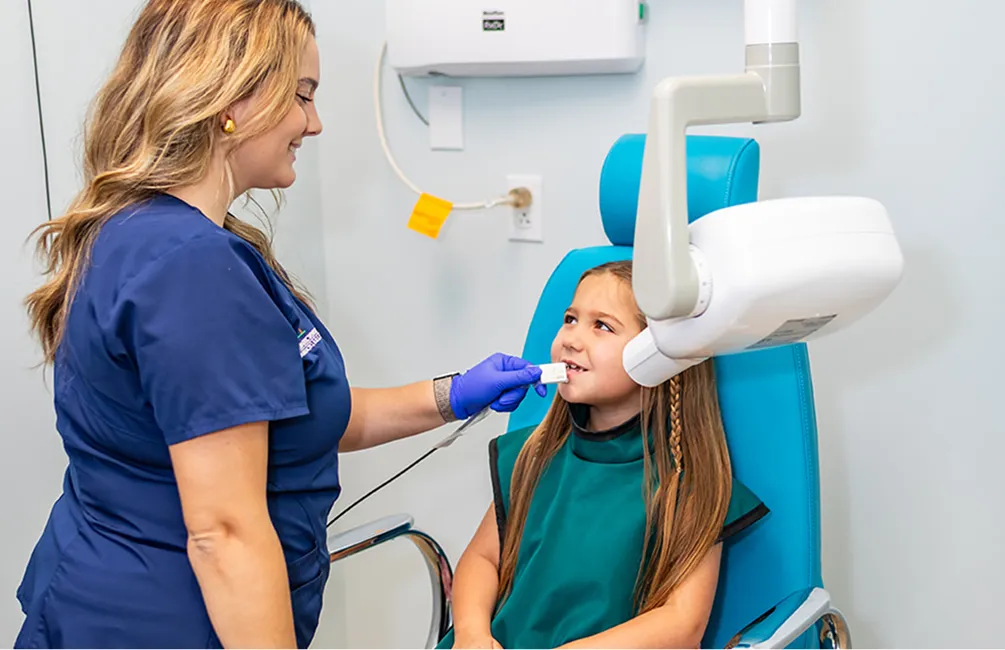
You watch your child brush every morning and night. You've bought the fun toothbrush, the kid-friendly toothpaste, and you've even set a timer. So why did the dentist find a cavity at the last visit?
Plenty of parents ask this same question. It's one of the most common concerns we hear from families, and the frustration is real. If your child brushes consistently and still develops tooth decay, you're probably wondering why children get cavities even with brushing. The truth is, brushing matters, but it's just one piece of a much larger puzzle.
Dr. Hannah Noto, our board-certified pediatric dentist, explains it this way: cavities form when acid-producing bacteria attack tooth enamel over time. These bacteria live in the mouth naturally, and they thrive on sugars from food and drinks. When they feed, they release acids that slowly wear away the protective outer layer of teeth.
Kids face a particular disadvantage here. Their tooth enamel is thinner and softer than adult enamel, making it more vulnerable to these acid attacks. That alone raises the stakes.
Several factors work together to create the conditions for decay. Diet, genetics, saliva production, and brushing technique all play a role. A child might brush twice daily but still miss the deep grooves in their back teeth. Or they might have a snacking habit that keeps their mouth in an acidic state for hours at a time.
Understanding these root causes helps you take a more thorough approach to your child's dental health. Our team at Park Pediatric Dentistry helps families identify the specific factors affecting their child's smile and build habits that truly protect against cavities. For many families, that starts with learning what brushing alone can and can't do.
How Cavities Develop in Kids: The Hidden Factors Behind Tooth Decay
Cavities develop when acid-producing bacteria break down thin enamel, often due to incomplete brushing technique, frequent snacking, low saliva production, or bacteria passed from caregivers. Brushing alone doesn't address all of these risk factors.
That's why decay can still show up in kids who brush twice a day. The main culprit behind cavities is a bacterium called Streptococcus mutans. This tiny organism lives in dental plaque, the sticky film that forms on teeth throughout the day. When your child eats or drinks something containing sugar, these bacteria feast on it and produce acid as a byproduct. That acid sits on tooth enamel and gradually breaks it down.
Why Brushing Technique Matters More Than Frequency
Brushing removes plaque from tooth surfaces, but kids often struggle with proper technique. They might brush the front teeth thoroughly while barely touching the molars in the back.
The chewing surfaces of molars have deep pits and grooves that trap food particles and bacteria. Without careful brushing, plaque builds up in these hidden spots. These are the exact areas where we most often find early decay during pediatric dental exams at our office.
How Snacking and Saliva Affect Decay
Snacking habits create another challenge. Every time your child eats something sugary or starchy, their mouth becomes acidic for roughly 20 to 30 minutes afterward. Frequent snacking or sipping on juice, sports drinks, or even milk throughout the day keeps the mouth in this acidic state almost constantly. The teeth never get a break to recover.
Saliva serves as the mouth's natural defense system. It washes away food particles, neutralizes acids, and contains minerals that help repair early enamel damage.
Some kids produce less saliva than others, or they breathe through their mouths, which dries out oral tissues. Without adequate saliva, the mouth loses its built-in protection against decay.
Bacteria Transfer from Caregivers
Cavity-causing bacteria can pass from caregivers to kids. Sharing spoons, testing food temperature with your mouth, or cleaning a pacifier with your saliva can introduce these bacteria to your child's mouth. This is called vertical transmission, and it can happen before your child even has teeth. That's one reason early dental visits matter so much.
Key Nutrients and Habits That Protect Your Child's Teeth
Good nutrition and daily oral care habits beyond brushing play direct roles in building strong teeth and preventing cavities in kids.
What Nutrients Strengthen Tooth Enamel?
Calcium and phosphorus are the building blocks of tooth enamel. These minerals work together to keep enamel dense and resistant to acid attacks. They also support remineralization, the natural process where minerals are deposited back into enamel after acid exposure. Dairy products, leafy greens, and fortified foods provide these essential nutrients.
Your child also needs Vitamin D for calcium absorption, Vitamin A for healthy mouth tissues, and Vitamin C to keep gums strong and resistant to infection. A balanced diet with plenty of vegetables, fruits, and protein sources delivers these protective vitamins naturally.
What Daily Habits Help Prevent Cavities?
Beyond nutrition, daily habits make a real difference. Water after meals rinses away food particles and helps neutralize mouth acids faster than saliva alone. That's an easy win.
Floss every day. Toothbrush bristles can't reach the tight spaces between teeth, so daily flossing removes plaque from these areas before it hardens into tartar.
Sticky snacks like fruit snacks, dried fruit, and chewy candy cling to teeth and feed bacteria for extended periods. Limit them whenever you can, and when your child does eat sweets, try timing them with meals rather than between meals. This reduces the total number of acid attacks throughout the day.
When it comes to snack choices, cheese, nuts, and crunchy vegetables are better options than crackers, cookies, or chips. Small swaps add up over time. Our team at Park Pediatric Dentistry talks through these strategies with families at every visit because the changes you make at home often make the biggest difference.
Brushing Alone vs. a Complete Cavity Prevention Routine
A complete cavity prevention routine combines multiple strategies because brushing alone handles only one job: removing surface plaque from the fronts, backs, and chewing surfaces of teeth. It can't do everything. The areas between teeth, the deep grooves in molars, and spots where the gums meet the tooth are exactly the places where cavities often start.
Here's what a thorough prevention routine looks like in practice:
- Fluoride toothpaste strengthens enamel and fights bacteria across all tooth surfaces. It's your first line of defense at home.
- Daily flossing cleans the tight spaces between teeth where bristles simply can't reach. These interproximal areas are common cavity sites.
- Dental sealants act as a protective barrier over the pits and fissures of molars, sealing out bacteria and food particles.
- Professional cleanings remove hardened tartar that no amount of home brushing can eliminate, especially along the gum line. Once plaque calcifies, only professional instruments can safely clear it away.
- Dietary changes reduce acid production across the whole mouth environment, giving enamel more time to recover between meals.
That's why regular dental exams and cleanings every six months matter so much. The ADA recommends combining these preventive measures to significantly lower cavity risk. When families commit to this multi-layered approach, kids often go from getting cavities at every visit to having clean exams year after year.
What Influences the Cost of Treating and Preventing Childhood Cavities
The cost of treating childhood cavities depends on the severity of decay, the type of restoration needed, and whether sedation is required. Prevention costs far less than treatment in nearly every case.
A dental sealant or fluoride treatment requires minimal time and expense. A filling costs more. A crown costs even more. And if decay reaches the nerve, treatment becomes significantly more complex and expensive. According to the ADA, preventive care costs a fraction of what restorative treatment requires over time.
The severity of decay determines what treatment your child needs. A small cavity caught early might need just a simple filling. A larger cavity could require a crown to restore the tooth's strength and function. If a child has significant anxiety or extensive treatment needs, sedation may be necessary, adding to the overall cost.
The good news is that most dental insurance plans cover preventive care for kids at 100%. This typically includes:
- Routine exams and cleanings
- Fluoride treatments
- Dental X-rays
- Sealants on permanent molars
Taking advantage of these covered benefits helps catch small concerns before they become big ones. Early intervention protects both your child's comfort and your family's budget. Our team at Park Pediatric Dentistry helps families understand their coverage and make the most of preventive benefits.
Which Children Are Most at Risk for Cavities Despite Brushing?
Some kids face higher cavity risk due to factors beyond their brushing habits. We see these patterns regularly across the families we care for.
Tooth Anatomy and Crowding
Kids with deep grooves in their molars or crowded teeth have more places for plaque to hide. Even careful brushing may not reach these spots, which is why sealants can be so valuable.
Family History and Genetics
Cavity-causing bacteria and enamel characteristics run in families. If parents or siblings have had significant decay, a child may carry similar risk factors. Extra prevention steps are worth the effort.
Dry Mouth and Saliva Production
Kids who breathe through their mouths, take certain medications, or naturally produce less saliva lack this important protective factor. A dry mouth allows bacteria to thrive and acids to linger.
How Do Eating Patterns and Age Factor In?
Kids who graze on snacks throughout the day or carry sippy cups of juice maintain constantly acidic oral conditions. Their teeth face repeated acid attacks without recovery time. On top of that, kids under age 7 or 8 typically lack the fine motor skills to brush thoroughly on their own. They need parents to supervise and assist until they can show consistent technique.
Our board-certified pediatric dentist evaluates each child's individual risk factors and creates recommendations built around your child's needs. Some kids benefit from more frequent cleanings or additional fluoride treatments. Others may need sealants on baby teeth, not just permanent ones.
Frequently Asked Questions About Kids and Cavities
Can genetics really cause cavities in kids?
Yes, genetics influence cavity risk in several ways. Enamel thickness and strength are partly inherited, and the types and amounts of bacteria in the mouth also have genetic components. Some families naturally harbor more cavity-causing bacteria than others. This doesn't mean cavities are inevitable, but some kids need extra preventive measures.
How often should my child visit the dentist to prevent cavities?
Most kids should see their board-certified pediatric dentist every six months for exams and cleanings. Kids with higher cavity risk may benefit from more frequent visits. Your dentist will recommend a schedule based on your child's specific needs. Oral health history and individual risk factors guide that recommendation.
Are dental sealants worth it for cavity prevention?
Sealants rank among the best-studied ways to prevent molar cavities in kids. They're a quick, painless coating applied to the chewing surfaces of molars. Research from the CDC shows that sealants significantly reduce cavities in back teeth for several years after application. For kids with deep molar grooves, sealants provide excellent protection.
What's the best toothpaste for kids who still get cavities?
Look for an ADA-accepted fluoride toothpaste. For kids under 3, use a rice-grain-sized smear. For kids 3 to 6, use a pea-sized amount. Fluoride strengthens enamel and helps reverse early decay before it becomes a cavity. If your child continues getting cavities, ask your dentist about prescription-strength fluoride options.
Should I brush my child's teeth for them?
Parents should actively brush their child's teeth until around age 6, then supervise and assist until age 7 or 8. Even older kids benefit from a parent doing a quick follow-up brush at bedtime. Watch your child brush and check their teeth afterward. If you see plaque remaining, they need more guidance on technique.
Cavities in kids who brush regularly can feel discouraging, but understanding the full picture helps you make changes that work. When you combine good brushing technique with flossing, smart nutrition choices, and regular professional care, you give your child's teeth the best chance to stay healthy.
Your family deserves a dental team that looks at the whole picture, not just what happens at the sink twice a day. Our board-certified pediatric dentist and the team at Park Pediatric Dentistry work with families to create visits kids actually look forward to and build habits that stick. If your child has been getting cavities despite brushing, talking with your dentist about the specific factors at play can help you develop a prevention plan that fits your child's needs.