

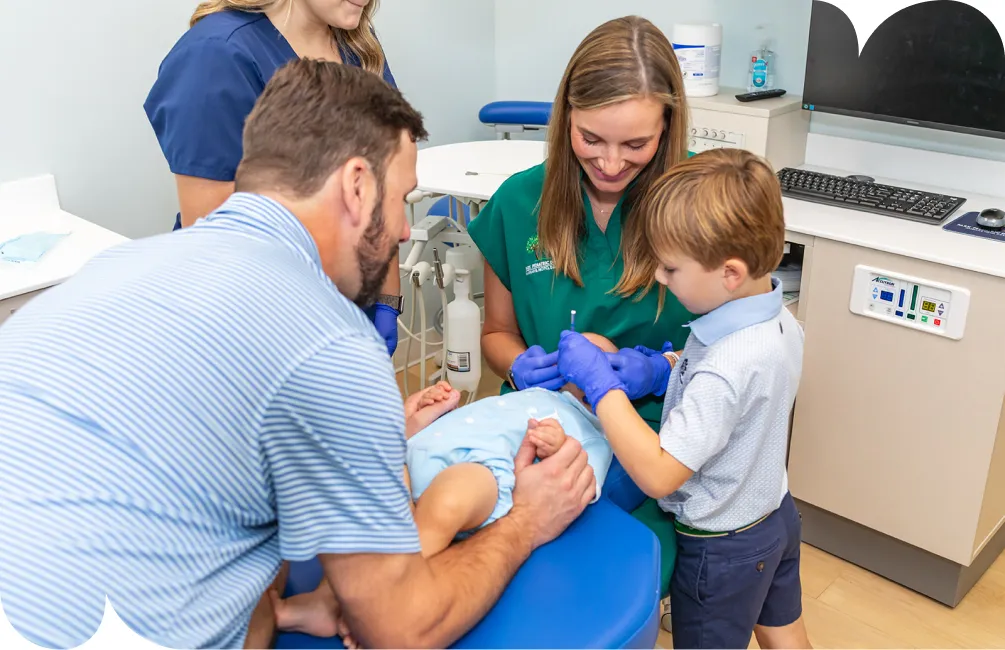
Dental sealants are thin, BPA-free resin coatings applied to the chewing surfaces of back teeth. They fill the natural grooves and pits where bacteria hide, reducing cavity risk by up to 80% according to the CDC. For most kids, sealants are one of the smartest preventive steps a parent can take.
Parents often ask us: what are dental sealants and do kids need them? Here's what you should know. Molars have bumpy, grooved surfaces that trap food and bacteria. Even kids who brush well can miss those tiny crevices. Sealants create a smooth, easy-to-clean barrier that keeps decay-causing bacteria out.
Dr. Hannah Noto, our board certified pediatric dentist, typically recommends sealants for permanent molars and premolars as they come in. Sometimes primary (baby) molars get sealed too, especially if they have deep grooves. The best part? Your child won't feel a thing. No numbing. No stress. Sealants are one of those treatments that parents wish they'd known about sooner, because the protection they offer is significant and the process itself is about as simple as preventive dental care gets. Most kids hop out of the chair without even realizing anything happened.
How Are Dental Sealants Applied? A Step-by-Step Process
Getting dental sealants at Park Pediatric Dentistry is one of the quickest, easiest treatments in pediatric dentistry. Each tooth takes only a few minutes, and kids stay comfortable the whole time.
Step 1: Cleaning the tooth
The team thoroughly cleans the tooth surface to remove any food particles or plaque. This takes just a few seconds per tooth.
Step 2: Preparing the surface
A mild acidic gel is applied to the chewing surface. This creates tiny rough spots that help the sealant bond securely to the enamel. Kids don't feel it.
Step 3: Rinsing and drying
The gel gets rinsed off and the tooth dried completely. Moisture kills the bond, so this step matters.
Step 4: Applying the sealant
Liquid sealant material is painted directly onto the tooth's grooves and pits. It flows into every tiny crevice, and the whole application takes less time than it takes to describe it.
Step 5: Curing the sealant
A special curing light hardens the sealant in seconds. Once it's set, your child can eat and drink normally right away.
That's it. No recovery time, no fuss. Kids often don't even realize anything happened.
5 Key Benefits of Dental Sealants for Kids
Why do pediatric dentists recommend sealants so often? Here's what makes them such a smart preventive step for families.
Proven Cavity Prevention
Sealants block bacteria from settling into tooth grooves. The CDC reports they reduce cavity risk on treated surfaces by up to 80% in the first two years. That physical barrier does the heavy lifting, even when brushing misses a spot.
No Numbing Required
No numbing, no sedation. Kids who feel nervous about dental visits often find sealant visits surprisingly easy, and most are done before they know it.
Real Cost Savings Over Time
Preventing a cavity costs far less than treating one. A single filling can cost several times more than sealing multiple teeth, making sealants one of the best values in pediatric dental services.
Long-Lasting Protection
With proper care, sealants protect teeth for five to nine years. Our team checks them at regular visits and can reapply if needed. Many sealants last even longer depending on the child's habits and bite.
Extra Defense for Cavity-Prone Kids
Some kids have naturally deep grooves in their teeth or higher cavity risk due to diet, dry mouth, or enamel variations. Sealants give these kids an extra layer of defense. For families who have dealt with repeated cavities, sealants can be a real turning point.
Dental Sealants vs. Fluoride Treatments: How Do They Compare?
Dental sealants create a physical barrier on chewing surfaces, while fluoride treatments strengthen enamel chemically across all tooth surfaces. Parents sometimes wonder whether their child needs sealants, fluoride treatments, or both. The short answer: they work differently and pair well together.
| Feature | Dental Sealants | Fluoride Treatments |
|---|---|---|
| How it works | Creates a physical barrier on tooth surface | Strengthens enamel through chemical remineralization |
| Where it protects | Chewing surfaces of back teeth only | All tooth surfaces, including smooth sides |
| Application frequency | Once, lasting 5-9 years | Reapplied at regular dental visits |
| Best for | Preventing decay in pits and fissures | Strengthening enamel everywhere and reversing early decay |
Think of sealants like a hat that shades specific areas completely. Fluoride works more like sunscreen, strengthening the skin everywhere it's applied. Using both gives your child the best protection.
Neither treatment replaces daily brushing and flossing. They add extra protection on top of good home care habits. At Park Pediatric Dentistry, our team often recommends both as part of a child's preventive care plan.
How Much Do Dental Sealants Cost for Kids?
Dental sealants typically cost $30 to $60 per tooth without insurance. Most dental insurance plans cover sealants for kids at 100%, making them one of the most affordable preventive treatments in pediatric dentistry.
Here's where the math gets interesting. A single filling typically costs $150 to $300 or more. Crowns run even higher. Sealing all four first molars might cost what you'd pay for one filling. Prevention really does pay off.
Insurance coverage
Good news: most dental insurance plans cover sealants for kids up to ages 14 to 18. Many families pay nothing out of pocket.
Other resources
Medicaid and CHIP programs in Louisiana and many other states cover pediatric sealants. Some school-based dental programs offer them at no cost to families who qualify. Before your child's visit, the team can verify your coverage so you know exactly what to expect.
Does Your Child Need Dental Sealants? Who's a Good Candidate?
Most kids benefit from dental sealants on their permanent molars. The best time to apply sealants is when first molars appear around age 6 and second molars around age 12, before cavities have a chance to form. Not every tooth needs a sealant, but protecting those permanent molars gives kids a real advantage.
Timing matters
First permanent molars typically appear around age 6. Second molars come in around age 12. Sealing these teeth soon after they erupt gives the greatest benefit.
Tooth anatomy plays a role
Kids with deep grooves and fissures in their molars benefit most. These natural variations create hiding spots for bacteria that brushing alone can't reach.
Cavity history counts, too
Has your child had cavities before? Kids with a history of decay face higher risk for future cavities. Sealants offer real protection for these kids.
Individual assessment
During routine dental exams, our team evaluates each child's unique situation. Dr. Noto considers factors like diet, brushing habits, saliva production, and enamel quality before making a recommendation.
Some kids with very shallow grooves may not need sealants at all. Others benefit from sealing baby molars to protect them until permanent teeth arrive. Every child is different, which is why a personalized evaluation matters so much.
Frequently Asked Questions About Dental Sealants for Kids
Are dental sealants safe for kids?
Yes. According to the CDC's 2016 school sealant report, dental sealants are both safe and effective for kids. The ADA's Mouth Healthy resource confirms this as well. Sealants have been used successfully for decades, and the materials go through FDA testing and approval before they're cleared for pediatric use. Our team uses BPA-free sealant materials for added peace of mind.
Do dental sealants contain BPA?
Some sealant materials contain trace amounts of BPA or BPA derivatives, but the exposure is minimal and far below levels considered harmful. The ADA notes that BPA exposure from sealants is far lower than everyday sources like food packaging. Many practices, including Park Pediatric Dentistry, use BPA-free formulations. The protection sealants provide is well worth it.
Can sealants be placed over early signs of decay?
Yes. When a board certified pediatric dentist spots very early enamel decay that hasn't progressed further, placing a sealant can stop the cavity from growing. The sealant cuts off the bacteria's food supply and prevents further damage. This approach avoids the need for a filling.
How long do dental sealants last?
Sealants typically protect teeth for five to nine years, and some last even longer. The dentist checks sealant condition at every regular visit. If a sealant chips, wears down, or falls off, it can be easily reapplied.
Do sealants replace brushing and flossing?
Not at all. Sealants protect the chewing surfaces of back teeth, but cavities can still form between teeth and along the gumline. Daily brushing with fluoride toothpaste and flossing remain essential. Think of sealants as backup protection that works alongside good habits.
What if my child grinds their teeth?
Teeth grinding can wear down sealants faster than normal. Our team may recommend more frequent checks or discuss additional protective measures. Sealants still provide valuable protection even for grinders, though they may need reapplication sooner. Bring it up at any visit and the team will adjust the care plan accordingly.